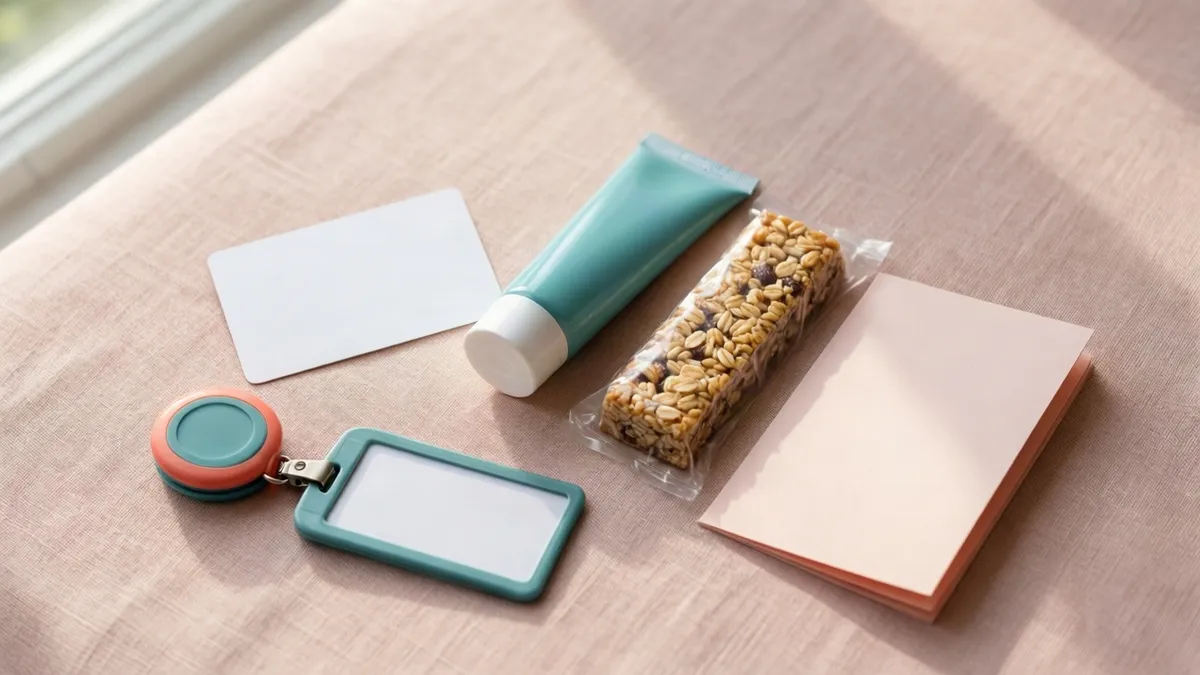
In short: The best thank-you gift for a nurse is one that survives the shift it is meant to help. It fits in a scrub pocket, wipes down, or works in a twenty-minute break taken standing up. Skip the decorative mug and the "world's best nurse" plaque. We walk you through what to buy, what to skip, and the one question to ask at the desk before you spend a dollar.
We write buying guides, not reviews. Nothing on this page was tested on a hospital floor by us, and specifications come from the manufacturer or the listing. Whatever Amazon shows when you click is the authoritative figure on price, availability, and ratings.
This article contains affiliate links. If you buy through one, we earn a small commission at no extra cost to you. We only recommend what we would suggest to a friend.
The Federal Trade Commission's endorsement guides, 16 CFR Part 255, require a disclosure like that one to be difficult to miss, so it sits above every link here. Our full affiliate disclosure has the rest.
Most thank-you gifts for nurses fail one test: they do not survive the shift. A mug sits in a locker. A candle stays home. A plaque goes nowhere. If you have read our broader Gifts for Nurses: What Actually Survives the Shift guide, you know the rule we use. This page narrows it to the thank-you occasion, where the buyer is usually grateful, slightly awkward, and working from a budget.
The occasion matters. Thanking a nurse after a hospital stay is different from shopping for National Nurses Week, May 6–12, which the American Nurses Association (ANA) promotes as a profession-wide celebration. A post-stay thank-you is personal. A Nurses Week gift is often collective. Both should pass the shift test.
Start with the shift, not the sentiment
The job is twelve hours, much of it standing, with a break that may not happen when it is scheduled. A gift that does not fit into that day is a gesture for you, not for them. Run every idea through three questions. Does it fit in a scrub pocket, can it be wiped down with a disinfectant wipe, and does it work during a break taken standing up?
If the answer to all three is no, the gift is decoration. Decoration is not useless. It lives at home, on a shelf, and the nurse thinks about the job when they see it. Sometimes that is fine. Most of the time, after a hard week, they would rather have something that made the next shift easier.
Skip anything printed with "healthcare hero" or a stethoscope heart. Nurses are workers doing a difficult job under conditions that are physically and emotionally draining, not characters in a sentiment. A gift that acknowledges the actual work lands better than one that performs gratitude.
Before you buy, run this checklist:
- Ask at the desk what the hospital allows before you spend anything.
- Decide whether you are thanking one nurse or a whole unit.
- Run the gift through the shift test: pocket, wipeable, break-friendly.
- Add a handwritten note naming what the nurse actually did.
- Deliver it through the charge nurse if you are still a patient.
Thank you gifts for a nurse you don't know
Most thank-you gifts come from patients or families who know one nurse by name and nothing else about them. That is normal. The safe picks work regardless of unit, specialty, or personal taste.
A gift card is not a cop-out here. It is portable, fits in a badge holder, and works on a night shift when nothing is open. A multi-brand digital card lets the nurse pick coffee, food, or groceries, which means it cannot be the wrong size or the wrong flavor. Check the platform's own pricing page for any per-contribution fee before you load it.
Hand cream is the other safe pick. Nurses wash and sanitize their hands dozens of times a shift, per the CDC, and the skin takes a beating. A small tube of unscented, hospital-friendly hand cream fits in a scrub pocket and gets used up. Avoid heavily scented lotions, which clash with a clinical environment and bother patients and colleagues. Unscented hand cream is the move.
Snack packs work if you buy the right kind. Individually wrapped, shelf-stable, and labeled. A box of granola bars or protein snacks left at the nurses' station will disappear by end of shift. Avoid homemade baked goods, which some hospitals discourage, and anything that needs refrigeration.
A handwritten note is the one thing every guide agrees on, and it costs nothing. Name the nurse. Name what they did. Keep it specific. Here is our suggested version, which you can copy and fill in:
Dear [nurse's name], you [specific thing they did] on [date or night]. [Patient name] is doing better because of it. Thank you for not rushing through that. — [your name]
That note goes in a locker and stays there longer than any tumbler.
Pocket-size gear that earns its place
Small work accessories are where personalization meets practicality. A badge reel is the most repeated gift in this category, and for good reason. Every nurse wears one, it gets used hundreds of times a day, and it is visible. The cheap ones break. The heavy-duty ones with a metal clip and a retractable cord survive months of being yanked.
Look for a reel that wipes clean. Fabric-backed reels trap grime. Solid plastic or sealed resin backs can be wiped with a disinfectant wipe and stay functional. Heavy-duty badge reels in the $8 to $12 range outlast the $3 packs by a wide margin.
A mini flashlight is useful for night-shift nurses who need to check pupils or read a chart without waking a patient. The penlight style with a pupil gauge printed on the side is a clinical tool, not a novelty. Avoid anything that requires a special battery. LED penlights with standard batteries are the practical pick.
A multitool on a keychain can be handy, but most hospital policies restrict blades. Look for a tool with scissors, a bottle opener, and a screwdriver, no knife. The kind that folds into a small rectangle and clips to a lanyard is the version that survives a shift without getting confiscated.
Badge reference cards and pocket guides help new grads and students. They slip behind a badge holder and put common vitals, lab values, or rhythms at a glance. The caveat: experienced nurses do not need them, and a cluttered card slows someone down. Buy these for a new nurse, not a veteran.
Stethoscope tags are a small, personal touch that does not interfere with the tool. An engraved tag with the nurse's name or initials helps in a unit where stethoscopes walk off. Keep it simple and light. A heavy charm on a stethoscope throws off the balance, and no nurse wants that.
Break-room gifts that survive a shared fridge
The break room is a shared space with a fridge nobody cleans and a microwave everybody uses. Gifts that live there need to be durable, labeled, and resistant to being claimed by someone else.
Insulated tumblers are the most recommended drinkware gift, and they work, but buy one that is not identical to the fifty others in the break room. A distinct color or a personalized engraving helps the nurse find theirs among the sea of similar cups. Insulated tumblers with a lid that snaps shut and a wide base that does not tip are the functional choice. Skip anything with a straw that cannot be cleaned.
A reusable water bottle with measurement markings helps nurses track intake on a shift where dehydration is a real risk. The kind that fits in a cup holder on a rolling cart is better than the kind that does not.
Food gifts for a unit should be individually portioned and shelf-stable. A tray of sandwiches from a deli is generous but needs refrigeration and disappears in twenty minutes. A box of protein bars, a basket of fruit, or a bag of good coffee for the break room pot lasts longer and reaches more people. Label it "for the unit, with thanks from [your name]" so it does not look like somebody's personal lunch.
Takeout gift cards for the unit are a strong move. Call a local restaurant near the hospital, ask if they do large catering orders, and buy enough for the team. Drop it off at the desk with a note. The charge nurse usually handles the logistics of ordering and distributing.
Recovery gifts that respect their time off
Self-care gifts are tricky. They assume you know what the nurse does on their day off, and most of the time you do not. Compression socks are the most repeated gift in this category, and they work, but sizing is critical. A pair that is too tight is painful. A pair that is too loose is useless. If you do not know the nurse's shoe size, skip them.
The case for recovery gifts is real. A 2021 meta-analysis in the Journal of Advanced Nursing, covering 16 studies and 18,935 nurses, found the prevalence of emotional exhaustion among nurses during the COVID-19 pandemic was 34.1 percent. One in three was running on empty. A gift that helps someone recover is not frivolous. It is practical.
The same analysis found depersonalization prevalence at 12.6 percent, meaning a meaningful share of nurses were emotionally distancing from patients as a coping mechanism. That is burnout doing what burnout does. Gifts that help a nurse reconnect with their own time, their own sleep, their own skin, are not indulgent. They address a documented toll.
But the gift has to fit the nurse's actual routine. A bath bomb is useless to someone who takes showers. A weighted blanket is generous but heavy to store in a small apartment. Sleep masks with a contoured design that does not press on the eyes help day-shift and night-shift nurses alike, since both need to sleep when the sun is up.
Hand masks and overnight hand treatments make sense for nurses whose hands are raw from washing. They go on before bed and work while the nurse sleeps. Avoid anything scented with lavender or eucalyptus if you do not know the nurse's preferences. Unscented is always safe.
A portable charger is a recovery-adjacent gift that earns its place on this list. Nurses use their phones on breaks, and a dead phone at the end of a twelve-hour shift is a small misery. Portable chargers that fit in a scrub pocket and hold at least one full charge are the practical pick.
Electronics like smart watches and wireless earbuds appear on high-end gift lists, and they are genuinely useful on a shift. But they are expensive, personal, and often restricted by hospital policy on the floor. Save these for a nurse you know well, not a thank-you after a hospital stay.
The policy question nobody asks
Before you buy anything for a nurse or a unit, ask at the desk. Hospitals set their own rules about what staff may accept, and some cap the value, ban cash, or restrict gift cards. It is a five-minute question that can save you from buying something the nurse has to politely refuse.
The Internal Revenue Service defines "de minimis fringe benefits" as items of small value that an employer may provide without tax consequences. However, hospital policies are often stricter than the tax code. A hospital may set its own cap well below what the IRS allows. The policy is usually available from human resources or the unit's charge nurse.
For bulk gifts to a unit, the rules can differ. Some hospitals allow food for the whole team when individual gifts are restricted. A pizza delivery or a catering platter for the nurses' station may pass where a $25 gift card to one nurse does not. Ask first.
Workplace violence contextualizes why practical gifts matter. Per the U.S. Bureau of Labor Statistics (BLS) 2021 figures, health care and social assistance workers faced many injuries. These figures are cited by the CDC's National Institute for Occupational Safety and Health (NIOSH).
In 2020, they had 10.3 injuries from assaults and violent acts per 10,000 full-time workers. For nursing and personal care facility workers, that rate was 21.8 per 10,000. A nurse who has had a hard shift is not thinking about a decorative plaque. They are thinking about getting through the next one.
A 2007 study referenced in the same NIOSH course found nurses experienced physical assaults at a rate of 13.2 per 100 nurses per year. That predates the pandemic. The job was already hard before 2020 made it harder. This is why a gift that helps with the actual work, not the sentiment around it, is the one that gets used.
National Nurses Week, May 6–12, is the one occasion where unit-wide gifts are expected and policies are usually relaxed. If you are timing a thank-you to coincide with the week the ANA promotes, check with the charge nurse about what the unit needs.
Cheap vs. durable thank you gifts
The shift test separates a $5 gift that gets used from a $25 gift that does not. Price bands below are ours, not a sourced figure. The table shows how the rule plays out across common categories.
| Gift | Budget pick (under $10) | Durable pick ($20–30) | What makes it survive a shift (our judgment) |
|---|---|---|---|
| Badge reel | Basic plastic reel, 3-pack | Heavy-duty metal clip, sealed resin back | Wipes clean, retracts under tension, survives daily yanking |
| Tumbler | Single-wall plastic tumbler with lid | Double-wall insulated, snap lid, wide base | Holds temperature for a full shift, does not tip on a cart |
| Hand cream | Travel-size unscented tube | Full-size clinical-grade hand cream | Fits in pocket, gets used after every wash, no scent to bother patients |
| Compression socks | Drugstore compression, limited sizes | Graduated compression, moisture-wicking fabric | Sizing matters more than price; wrong size is useless at any cost |
Our take: Spend more on one thing that lasts, rather than less on multiple things that break. The durable badge reel outlasts three cheap ones. The insulated tumbler holds temperature for a full twelve-hour shift. The exception is hand cream: the travel-size tube wins because it fits in a scrub pocket and gets used up, which is the point. For compression socks, skip them entirely unless you know the nurse's size.
Frequently asked questions
How much should I spend on a thank-you gift for a nurse?
Most buyers spend a relatively small amount for an individual nurse and a minimal amount per person for a unit. Certain gift amounts may trigger a hospital policy cap on what staff can accept, which varies by facility. A thoughtful note costs nothing and is often kept longer than the gift itself.
What gifts do nurses never want to receive again?
Decorative mugs, "world's best nurse" plaques, anything printed with a stethoscope heart, and scented candles top the list of items that pile up in lockers and at home. A nurse who has worked five years has likely received five of each. Functional items, or a note, land better.
Can I give a nurse a gift while they are still caring for me?
Yes, but keep it small and hand it to the charge nurse rather than the nurse directly, since the dynamic is complicated when you are still a patient. A note with a small item like hand cream or a snack pack works during a stay. Save the larger gift for after discharge.
What do night-shift nurses want that is different from day-shift?
Night-shift nurses want things that work when nothing is open. They need gift cards usable at 24-hour locations, a good sleep mask for daytime sleeping, and food that does not require a trip to a closed cafeteria. A portable charger is more useful on nights, since fewer outlets are accessible and the shift is quieter but longer between breaks.
What is the single best gift for a nurse I don't know well?
A handwritten note plus a multi-brand digital gift card. The note makes it personal. The card lets the nurse choose coffee, food, or groceries on their own schedule. It cannot be the wrong size, the wrong scent, or the fourth duplicate this week, which is why it is the safest thank-you gift for a nurse you barely know.
Rachel Okafor writes buying guides, not reviews; nothing here was tested by us.
Sources
- Journal of Advanced Nursing — "Nurses' burnout and associated risk factors during the COVID‐19 pandemic: A systematic review and meta‐analysis" (https://pmc.ncbi.nlm.nih.gov/articles/PMC8250618/) "Retrieved 2026-08-23".
- Internal Revenue Service — "De minimis fringe benefits" (https://www.irs.gov/government-entities/federal-state-local-governments/de-minimis-fringe-benefits) "Retrieved 2026-08-23".
- Federal Trade Commission — "Guides Concerning the Use of Endorsements and Testimonials in Advertising" (https://www.ftc.gov/legal-library/browse/federal-register-notices/guides-concerning-use-endorsements-testimonials-advertising) "Retrieved 2026-08-23".
- CDC — "Clinical Safety: Hand Hygiene for Healthcare Workers" (https://www.cdc.gov/clean-hands/hcp/clinical-safety/index.html) Retrieved 2026-08-23.